Why AI Adoption Is a People Challenge Before It Becomes a Technology Challenge
AI value is unlocked by people who feel able to use it — not by licences alone.
Ten observations from leading enterprise AI enablement for more than 900 colleagues at Banglalink.
The insight in ten cards
Most AI programmes don’t stall at the model. They stall at the moment a person decides whether to use it.
What we assume
- Buy the licences
- Roll out the tool
- Adoption follows
What often happens
- Usage spikes, then fades
- People return to old workflows
- Value stays in pilots
of global knowledge workers reported using AI at work — yet 60% of leaders worried their organisation lacked a clear plan and vision to implement it.
79% of leaders said their company needed to adopt AI to remain competitive.
Source: Microsoft & LinkedIn, Work Trend Index (2024) (opens in a new tab)The turning point was never access to a tool. It was the moment someone saw AI solve a problem from their own job.
AI adoption is a confidence problem disguised as a technology problem.
People adopt what they understand, trust and see others like them using.
Four conditions for AI fluency
- 01Relevance
Role-based use cases, not generic demos.
- 02Confidence
A safe space to experiment and fail.
- 03Champions
A trusted peer in every role.
- 04Reinforcement
The right tools and licences, tracked over time.
of AI users said they had received AI training from their company. Most are learning on their own.
PwC (Global AI Jobs Barometer, 2025): skills are changing 66% faster in jobs most exposed to AI.
Source: Microsoft & LinkedIn, Work Trend Index (2024) (opens in a new tab)If your AI licences doubled tomorrow, would your organisation’s ability to use them double too?
Capability is built in stages. Skipping one shows up later as low adoption.
AI is becoming the new Excel. The organisations that win will be the ones that teach everyone to use it well.
Related perspectives & work
From Dashboards to Decisions: What Business Analytics Should Actually Solve
A perspective on connecting analytical work with the decisions that matter.
Explore the insightWhat Moving from Engineering to Talent Management Taught Me About Transformation
Connecting technical systems, human capability and cross-functional change.
Explore the insight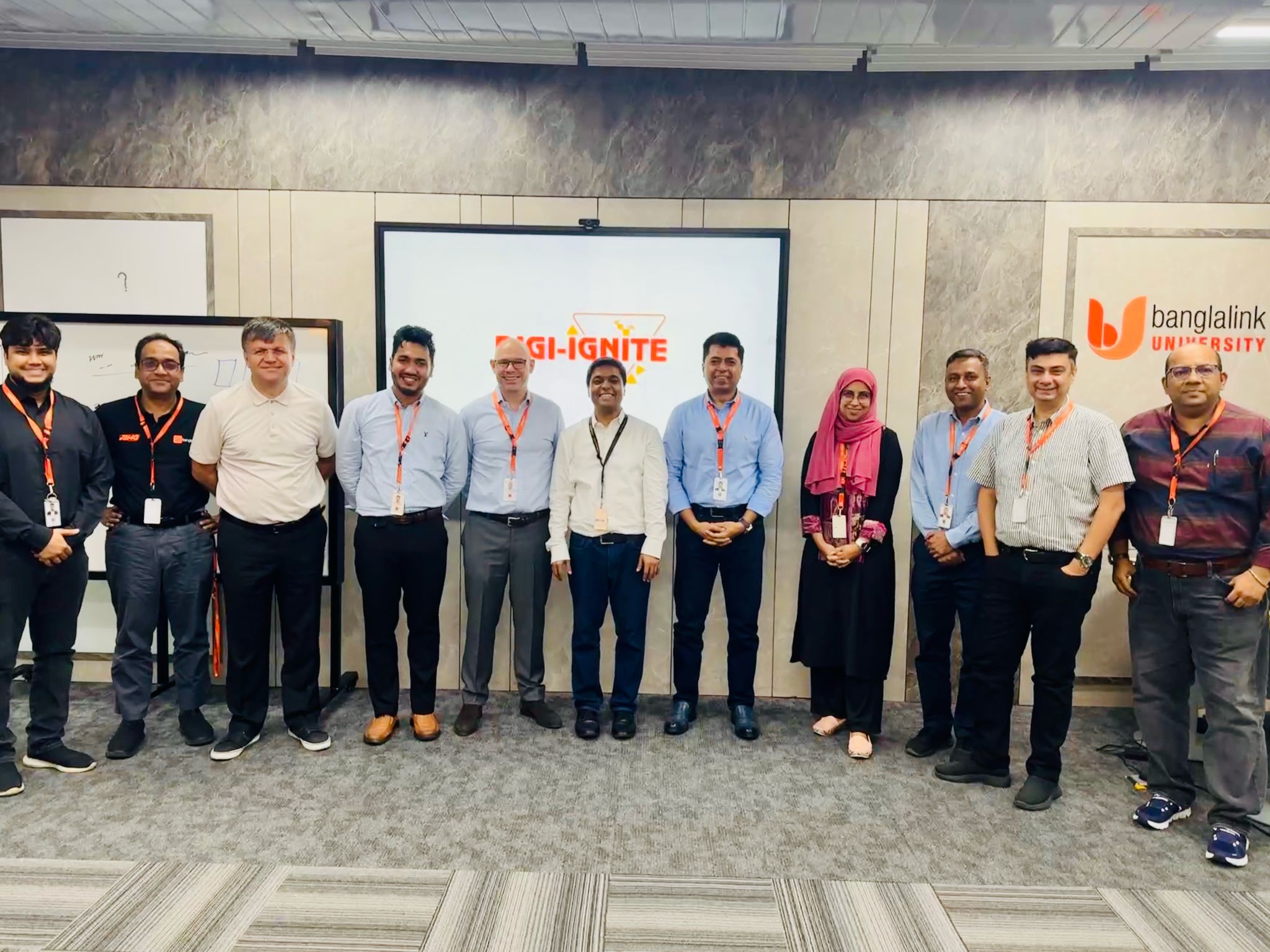 01 / SELECTED WORK
Scaling AI Capability Across the Organization
Turning AI awareness into practical capability through Digi-Ignite, AI Ascend and enterprise AI enablement.